

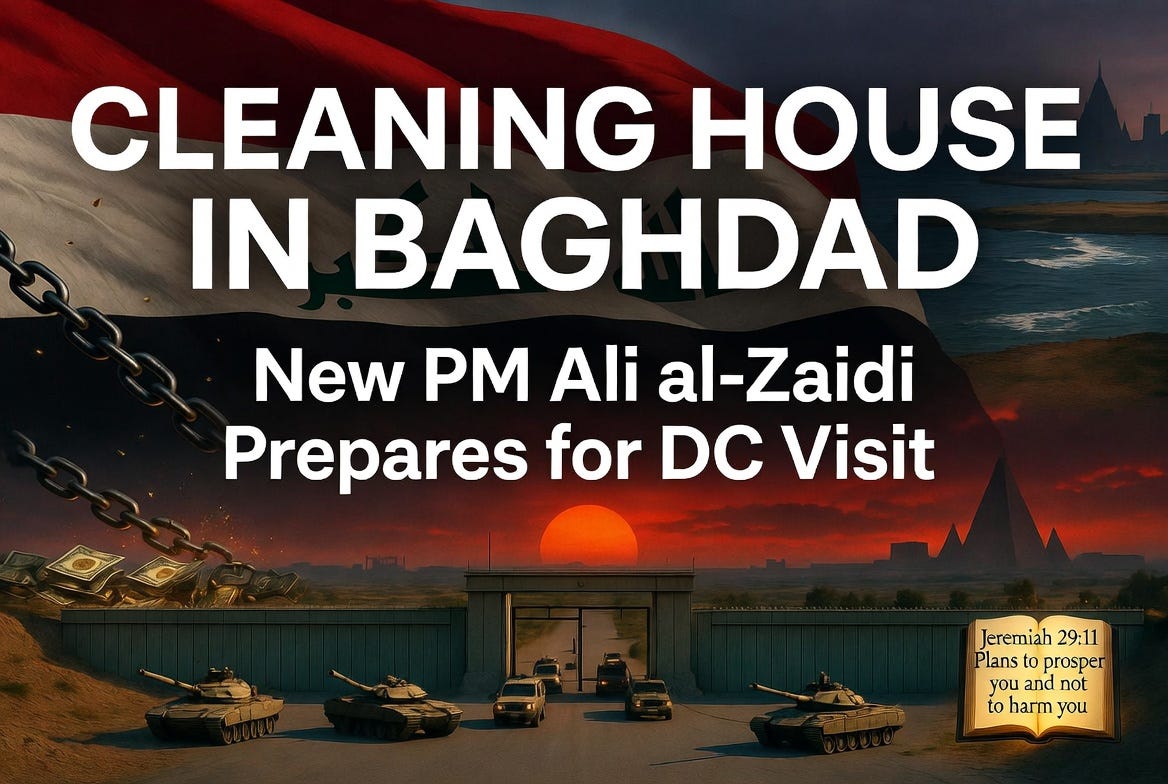
Let me tell you a story from the sands of ancient Mesopotamia, where power has always been a dangerous game of thrones, alliances, and sudden reckonings. In the heart of Baghdad, the heavily fortified Green Zone — that bubble of government offices, embassies, and elite residences along the Tigris River — was locked down tight this past weekend. Tanks rolled in, elite Counter-Terrorism Service units moved with purpose, and reports of gunfire echoed as dozens of high-profile officials found themselves in cuffs.
This wasn’t just another Middle Eastern headline about corruption. It’s a calculated move by Iraq’s new Prime Minister, Ali al-Zaidi, a 41-year-old businessman and political newcomer, as he prepares for a high-stakes visit to Washington. In the Old Eagle tradition of looking beyond the spin to see God’s hand in the affairs of nations — and the very human ambitions driving them — this crackdown signals both hope for reform and the gritty reality of power politics in a land long plagued by sectarian strife, Iranian influence, and entrenched graft.
The Dawn Raids That Shook the Green Zone
On June 28, 2026, security forces sealed entrances to the Green Zone and conducted sweeping pre-dawn raids. Iraqi state media and sources reported the arrest of approximately 47 officials, including sitting members of Parliament, former ministers, advisers, and figures from rival political blocs. Among the notable names: Muthanna al-Samarrai, leader of the Sunni Azm Alliance, and individuals linked to former Prime Minister Mohammed Shia al-Sudani‘s Reconstruction and Development Coalition, such as his brother and close associates.
The operation relied on elite Counter-Terrorism Service (CTS) units rather than standard police, bypassing potentially compromised chains of command. Videos circulating on social media showed armored vehicles, helicopters overhead, and tense scenes near the U.S. Embassy compound. One particularly striking report highlighted the seizure of large sums of cash, gold bars, and other assets from the home of Shiite MP Alia Nassif, a figure ironically tied to parliament’s anti-corruption committee.
At the center of it all: Confessions from Adnan al-Jumaili, a former Deputy Oil Minister arrested earlier. His testimony allegedly unraveled networks of financial corruption, illicit enrichment, dollar smuggling, and Iranian oil dealings used to fund political campaigns and armed factions. In Iraq’s complex sectarian quota system (muhasasa), such “confessions” often emerge from political deals — one player implicates others in exchange for protection or leniency.
ZeroHedge captured the drama vividly: The Green Zone lockdown came amid broader regional tensions, including Iranian drone and missile activity. The outlet noted the arrests appear aimed at political classes aligned with Iran, with al-Zaidi emerging as a consensus candidate who received explicit U.S. blessing.
Who Is Ali al-Zaidi? The Businessman Turned Reformer
Ali Falih Kadhim al-Zaidi assumed office in May 2026 as Iraq’s youngest prime minister. A Shia Muslim with a background in banking and business — and reportedly significant personal wealth — he lacks deep political experience but was chosen as a compromise after months of deadlock following November 2025 parliamentary elections. Al-Sudani’s bloc had strong showings, but internal Shia Coordination Framework (many aligned with Iran) maneuvering elevated Zaidi.
President Donald Trump congratulated him early, extending an invitation to the White House. U.S. officials, including Special Envoy Tom Barrack, have emphasized goals like disarming non-state militias, restoring state monopoly on security, combating corruption, and boosting economic ties — especially in energy. Al-Zaidi’s upcoming mid-July visit to DC is framed around investment, trade, and strategic partnership.
His government has pledged “zero tolerance” on graft. Deploying CTS for these raids shows seriousness — or at least a desire to project strength against expected resistance from powerful networks.
Strategic Maneuver or Political Purge?
Critics and realists see this as classic power consolidation. The new administration is weakening rivals from the previous orbit and resetting the balance. Cross-party impact — hitting Sunni Azm figures and Sudani allies — helps al-Zaidi build his own base while signaling to international partners.
Geopolitically, the timing is telling. Iraq sits at the crossroads of U.S.-Iran tensions. Smuggling networks and Iran-backed factions have long siphoned resources. By targeting these, al-Zaidi addresses U.S. concerns about militia influence and demonstrates he’s a reliable partner for investment. ZeroHedge’s read — that this may curb Iran-linked networks amid recent escalations — aligns with broader efforts to assert state sovereignty.
This could also reflect “failing to pay off the right people.” In Iraq, loyalty and protection rackets define survival. Those arrested may have bet on the wrong horse in the leadership transition or refused to align with new patronage flows. Corruption charges are real — Iraq ranks poorly on global indexes — but enforcement is almost always selective.
Faithful Perspective: Scripture reminds us in 2 Chronicles 7:14 that if God’s people humble themselves, pray, seek His face, and turn from wicked ways, He will hear from heaven, forgive sin, and heal their land. Iraq has a resilient Christian remnant and deep historical ties to biblical lands. True cleaning of house requires more than raids; it demands moral courage, justice tempered by mercy, and rejection of foreign meddling that fuels division. Al-Zaidi’s moves offer a window — will it lead to broader renewal, or just another rotation of elites?
Broader Implications for Iraq and the Region
This crackdown occurs against Iraq’s challenges: Oil-dependent economy, youth unemployment, militia proliferation, and reconstruction needs post-ISIS and decades of conflict. Success could unlock U.S. and international investment, stabilize security, and improve governance.
For the U.S., backing al-Zaidi fits a pragmatic approach: Support leaders who deliver tangible progress on terrorism, sovereignty, and economic openness rather than endless entanglement. Trump’s administration has stressed partnerships yielding benefits for Americans and Iraqis alike.
Skeptics point out past false dawns. Iraqi politics remain factional; militias retain power; corruption is cultural in some networks. Al-Zaidi must navigate Shia alliances, Sunni inclusion, Kurdish dynamics, and Iranian proximity. One bold sweep doesn’t dismantle entrenched interests.
Still, the use of elite forces and judicial warrants, plus public emphasis on confessions and seizures, suggests momentum. If followed by transparent trials, asset recoveries, and institutional reforms, it could mark a shift.
What Comes Next? Watch the DC Visit
Al-Zaidi heads to Washington with a “reform” narrative. Expect discussions on energy cooperation, security assistance, militia disarmament, and anti-corruption benchmarks for aid/investment. U.S. officials will likely press for concrete actions beyond optics.
For observers of faith and freedom, this matters. A more stable, sovereign Iraq reduces regional volatility, counters Iranian expansion, and creates space for Christian communities and civil society. America’s role should prioritize long-term partnerships rooted in shared interests — prosperity, security, and accountable governance — rather than nation-building fantasies.
As Old Eagle often reflects on America’s own founding and biblical principles: Leaders who fear God, love justice, and steward resources wisely bring blessing. Iraq’s path forward hinges on whether al-Zaidi’s house-cleaning is the start of genuine stewardship or merely prelude to new bosses at the trough.
The Green Zone raids are dramatic theater, but the real test lies ahead. Will arrests expand? Will militias be curbed? Will ordinary Iraqis see reduced corruption and opportunity? Or will this fade into the region’s familiar cycle?
Pray for wisdom for Iraq’s leaders, protection for the innocent, and God’s purposes to prevail in a land central to history and prophecy. As Jeremiah 29:11 reminds us — the verse inspiring so much purposeful work — God has plans to prosper, not harm, plans for hope and a future. May Iraq grasp some measure of that promise in our turbulent times.